The fundamentals of the steel-making process have not changed much in recent years, and the traditional stages remain the same, including melting, hot rolling, cold rolling, and coating.
Nevertheless, steel producers are constantly looking at ways to improve this process in small steps and are ever-focused on the demands of the marketplace.
Market trends in the steel sector depend very much on the demand from the end-user. For example, in the past few years, there has been an increased need for coated material, while quality requirements have become more exacting.
 Much of this change is driven by the influential automotive industry, which requires significant amounts of carbonized steel – a product of coating lines.
Additionally, the desire for greater fuel efficiency and the rise in popularity of electric-powered vehicles have increased the demand for thinner steel in order to build lighter cars.
One area that hasn’t changed – yet has always been important - is the need for steel with a high-quality surface for use in car exteriors. When you’re marketing a luxury SUV or top-of-the-range sports car, the last things you want to see are small dents or scratches caused by the steelmaking process.
This principle also applies to the white goods and construction sectors; stainless steel and other exposed metal needs to be in good condition to provide the necessary look and feel – poor surface quality will leave customers highly dissatisfied.
This all puts much greater pressure on surface inspection, with a demand for higher resolution cameras, improved lighting, and multiple angles of view to detect defects and anomalies that are otherwise difficult to spot until it’s too late.
WHY SURFACE INSPECTION IS ESSENTIAL FOR STEEL PRODUCTION
Steel production is made up of many different processes beginning with continuous casting and ultimately leading to the creation of a finished steel component that has been shaped, coated if necessary, and cut to size.
While surface inspection can benefit any steel process, it is particularly important for steel strips, where surface quality is usually a key specification.
In strip production, the cast slabs are hot-rolled to reduce thickness, passed through the pickling mill, then cold-rolled to improve surface finish and create the correct mechanical properties. The steel may then be annealed, coated, tempered, and/or galvanized before being cut to size at the slitters.
While quality control at the end of this long journey can detect problems with the steel before it is shipped to the customer, steel producers realized a long time ago that this is highly inefficient. It is much better – and more cost-effective – to identify issues at an earlier stage, before defective steel goes through expensive processing.
An added advantage of early detection is that it helps trace the root cause of any defects introduced by the process itself. For example, if there is no surface damage to the steel going into the cold rolling stage, but it consistently emerges with defects, this would indicate an issue with one of the rolls in the mill.
For this reason, major steel processors around the world use automated surface inspection systems at every stage, from the caster to the slitter. Automation removes human error from the inspection process and provides data that can be used when dealing with customer claims of defective steel.
HOW WE CAN HELP TO MEET THE CHALLENGES
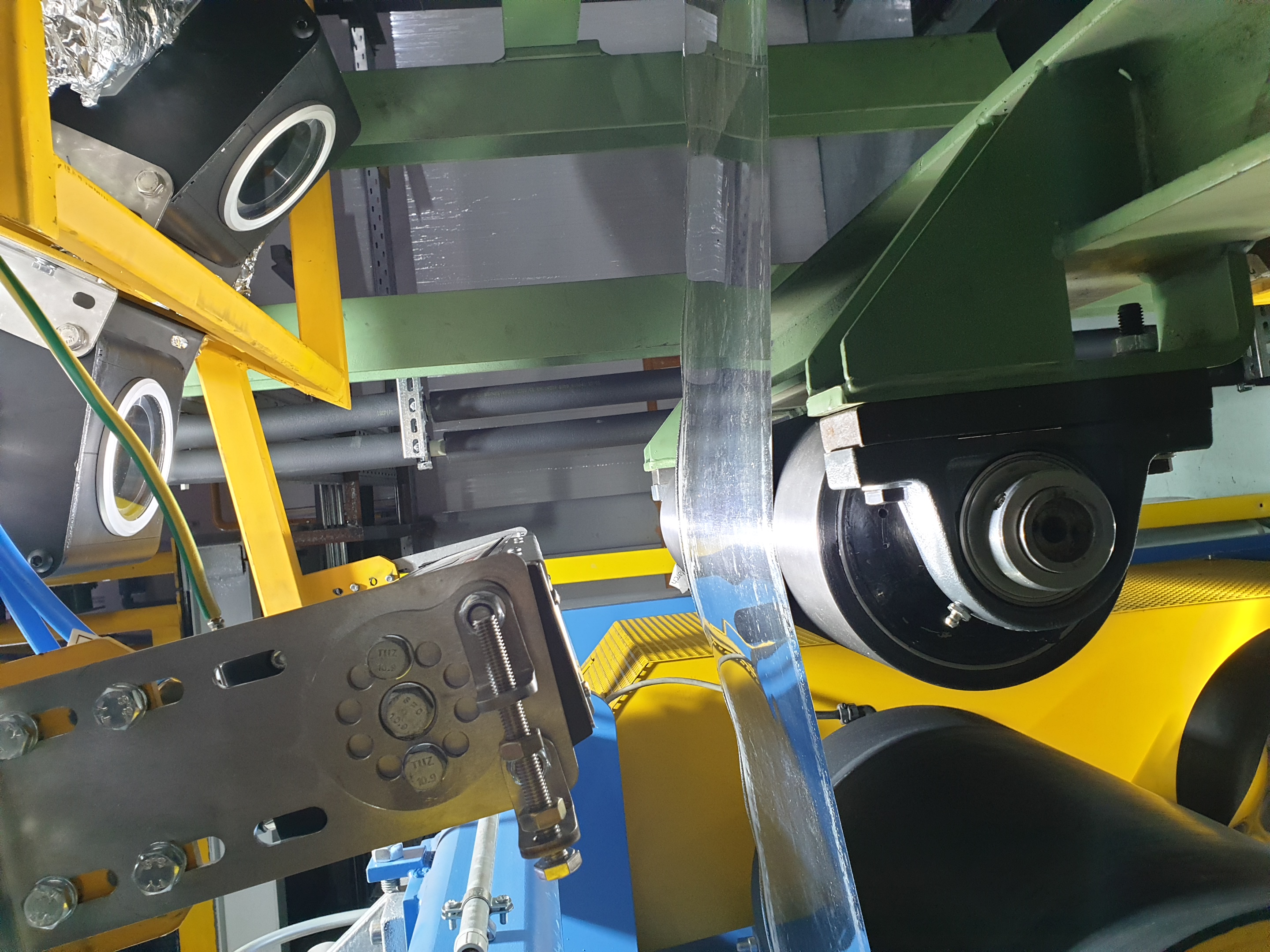 AMETEK Surface Vision’s solution is SmartView®, a robust, flexible surface inspection solution that accurately detects, classifies, visualizes, and reports defects and process conditions across steel processing lines. This system matches leading-edge software with rugged, proven hardware to provide the most precise real-time detection and classification possible.
This is a modular system that uses also third-party hardware, so can be regularly upgraded as technology develops or becomes more affordable.
The key to getting the best out of this – or any – inspection solution is expert installation. For example, in the harsh environment of the hot mill, cameras would be installed in a through-field configuration with the camera in a position perpendicular to the steel. This accommodates extreme pass-line variations and provides multi-illumination angle data about surface defects.
For the cold mill, however, it is usually better to set up the system with a combined or synchronized configuration, using brightfield, darkfield, and transmission views of the top and bottom of the steel. This also provides surface defect data, but also identifies pinholes smaller than the system resolution.
Another advantage of expert advice during the installation stage is that it can be made as compact as possible. Often steel processes will have little available space for inspection systems, so proven applications knowledge and an understanding of what is being looked for are key to keeping the system footprint small and unobtrusive, without affecting the operation and maintenance of the line.
DEALING WITH CHANGING TRENDS IN PICKLING LINES
One of the more recent trends AMETEK Surface Vision has seen over the last couple of years has been the rising demand for push-pull pickling lines.
The continuous pickling line is easier to inspect, as the steel bends over the roll allowing a constant view. It is typically a high-capacity process of similar steel grade.
The push-pull line – where a coil is pushed through the line and then pulled forward – has a much lower capacity but supports a more flexible ordering process. Each coil going through the process can be of a different steel grade or alloy.
Due to this flexibility, more support is needed from an inspection system. Optimization circuits are necessary for all installation positions to optimize the detection and classification performance. The push-pull pickling process and its flexibility means that this can become a challenge for setting up such an inspection system. The AMETEK Surface Vision solution is based on the streaming video concept, with the capability to rerun documented inspection with full resolution. This allows our customers to retrain and verify the inspection results on a recorded inspection.
Inspection of the push-pull line is more complex, as the material passing through the process is not only not bent, but also tends to be wavy rather than flat.
To overcome this and meet the developing trend, AMETEK Surface Vision developed special side lights and through-field concepts that could be configured to detect topographical defects versus textured surfaces on the steel surface.
Not only did this result in an effective inspection solution for the push-pull line, but also created a new strategy for the continuous pickling line, with the new sidelights providing improved images of topographical defects versus texture at the pickling line stage.
WHAT LIES AHEAD FOR SURFACE INSPECTION IN STEEL?
AMETEK Surface Vision is constantly looking at the best ways to improve its capabilities for steel inspection on roll-to-roll applications.
 Further demands of sheet inspections generated new optical setup concepts to improve dent detection on open web (pass line dynamics). New software algorithms are being developed to determine what the on-web and off-web situation is without any external sensors.
Additionally, surface inspection data can provide a full picture of the steel, allowing manufacturers and processors to grade it according to customer specifications – for example, providing flawless steel for automotive exterior use – and decide where to cut the coils to remove any defects that have made it through the process.
This is supported by AMETEK Surface Vision’s SmartAdvisor® process inspection solution, which offers complete process vision and is increasingly finding a role in the steel industry. Based on patented technologies, this solution synchronizes cameras across the process to deliver root cause analysis of any operational issues. This means that the SmartView system can be synchronized with SmartAdvisor to determine the origin of defects.
This can be a game-changing technology for steel producers, with recurring problems being identified and dealt with much more rapidly than before.
Surface inspection development is a two-way dynamic between the solutions provider and the steel manufacturer. As specifications become more demanding, lines become faster, and the defects become smaller, new solutions are created to meet the challenges. Once manufacturers have the new technology, it can drive further system improvements, until new solutions emerge.
MULTIPLEXING – MORE OPTIONS IN THE APPLICATION WORLD
One of the latest developments in inspection technology being pioneered by AMETEK Surface Vision is the use of multiplexing application features.
Multiplexing Cameras: One camera viewing angle with multiple light angles. This can be used if limited mechanical space in tight installation situations does not allow multiple camera angles.
In addition, each pixel of the multi-illumination angles is in perfect alignment. This allows on-web application without a reference roll constant image alignment during pass line variation.
The perfect pixel alignment opens up the concept of technologies like image subtraction. This feature can be used to reduce surface texture and, at the same time, to highlight and isolate topographical defects.
Multiplexing Views: Virtual views in the multiplex family allow us to process the camera information as a digital twin. This concept allows customers to run the same inspection under different settings in parallel, starting with independent image information, defect detection, classifiers, and data reporting. In most cases, this will be used to run the current process view versus the tuning view.
One sophisticated combination in the multiplex concept is to run the repeating defect filter algorithm separately.
This multiplex view will only concentrate on repeating defects. This algorithm can:
- handle thousands of pseudo-detections per second
- find all relevant repeat series and report only them
- minimize the number of false positive reports
One further example in the multiplex family is the so-called Shrink View. This function allows you to run a view with a low resolution, in parallel to the standard inspection view. Low-contrast defects, like chatter marks, will become more visible and detectable in this situation.
Shrink View, in combination with a dedicated projection threshold algorithm for a wide horizontal line with very low contrast on intense web texture, is an arrangement to detect transversal defects like kiss marks much more reliably.
For more information about our solutions for steel, click here
ABOUT THE AUTHOR
 Volker Koelmel
, Global Manager -
Plastics, Paper and Nonwovens His extensive knowledge of the surface inspection industry from both an engineering and logistical perspective enables him to apply AMETEK Surface Vision’s global expertise to solve customer challenges.