High-performance films are critical to modern industries, ranging from optical displays and advanced packaging to electronics and battery technologies.
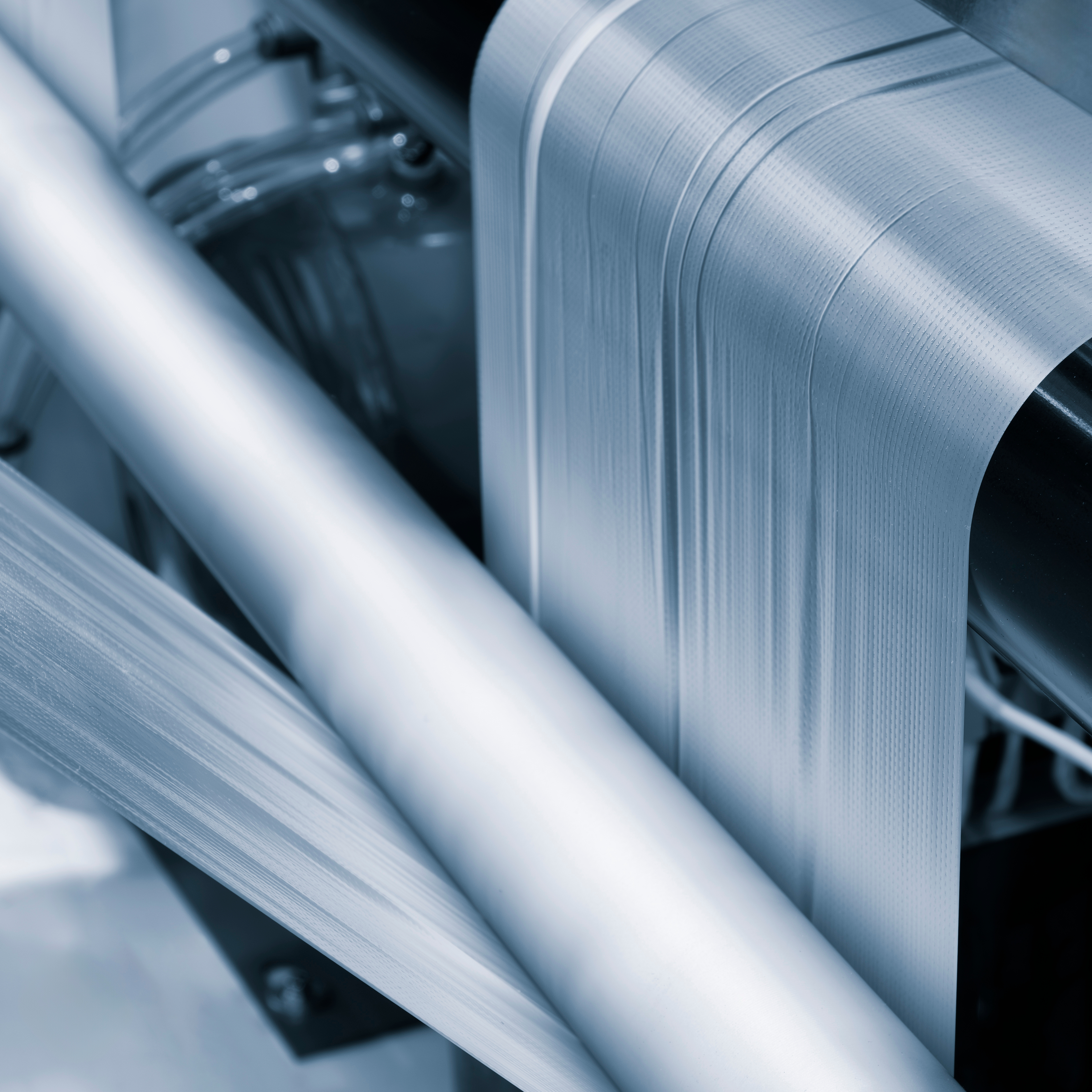
As production speeds increase often reaching up to 1,000–2,000 meters per minute, manufacturers face a growing challenge: maintaining extremely high-quality standards while running complex processes at full line speed.
From optical clarity to barrier performance and durability, even microscopic defects below 50–100 µm can significantly impact product performance. In many applications, defects at this scale are already unacceptable, particularly in safety critical or visually sensitive products.
The challenge is not only to detect defects, but to do so reliably and consistently in real-time under demanding production conditions.
Why High-Performance Films Are Harder to Inspect
Compared to standard packaging films, high-performance films are engineered for precise functionality and typically operate with
very low defect tolerance. These materials are higher in value and used in applications where reliability is essential.
The challenge increases significantly when films are
transparent or highly reflective. Their optical properties make defect detection inherently more difficult, due to:
• Low contrast between defect and background
• Partial light transmission through the material
• Specular reflections masking surface irregularities
As a result, defects that are physically present may not be visible under standard inspection conditions.
Typical Defects in Film Production
Common defect types include:
• Gels and inclusions
Caused by unmelted polymers or contamination, leading to weak points and optical distortion
• Black specks
Originating from oxidized material or degradation
• Pinholes
Microscopic perforations that can reduce barrier performance
• Scratches and particles
Introduced during processing or handling, affecting both functionality and appearance
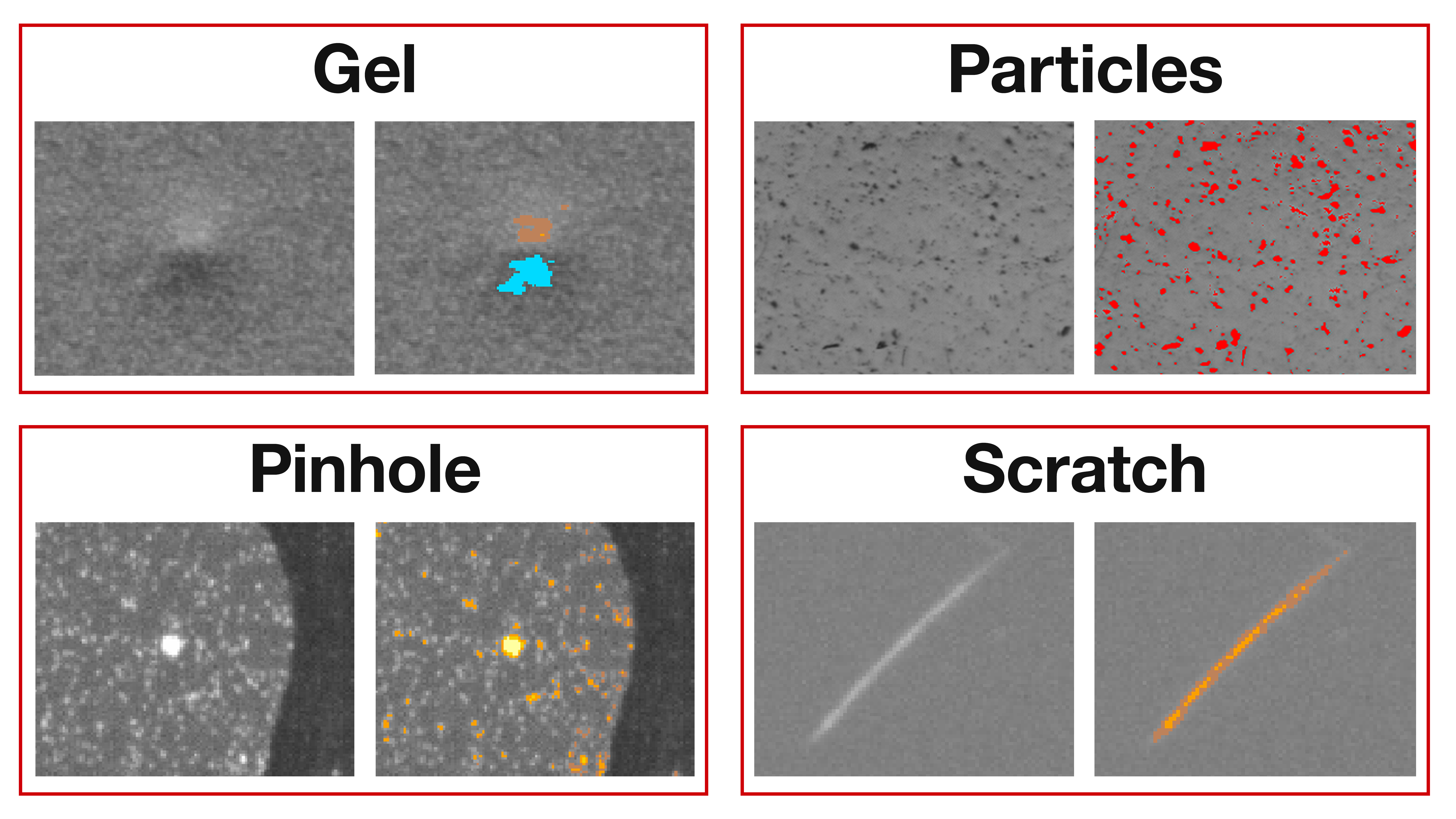
In advanced applications such as battery separator films, the impact of these defects becomes more critical. For example, a pinhole or inclusion can locally alter insulation properties and increase the risk of internal failure mechanisms. This makes reliable detection not only a quality requirement, but also a functional and safety consideration.
Why Manual Inspection Reaches Its Limits
Manual inspection methods were not designed for today’s production realities. At modern line speeds approaching thousands of meters per minute, consistent detection by human operators is no longer feasible.
In addition, defect types are becoming more complex, smaller, and harder to distinguish, especially on transparent or reflective surfaces.
Manual inspection often requires:
• Increased lighting intensity
• Multiple viewing angles
• Additional inspection steps
Even with these measures, detection reliability can vary significantly.
As quality requirements continue to be tight, particularly in electronics as well as EV and battery storage applications, manual inspection struggles to provide the repeatability and consistency needed for modern production.
The Role of Advanced Surface Inspection Systems
Automated surface inspection systems are increasingly central to maintaining quality in high-performance film production.
These systems enable manufacturers to:
• Detect and classify defects in real-time
• Monitor defect trends across the production process
• Identify potential root causes earlier
• Reduce downstream scrap and rework
For transparent and reflective materials, lighting design becomes a critical factor for success. Reliable detection requires carefully engineered combinations of:
• Brightfield illumination for uniform defects
• Darkfield illumination for surface features and scratches
• Multi-angle lighting to enhance contrast for low-visibility defects
This level of control allows systems to generate sufficient contrast, even for small or low contrast defects that would otherwise remain undetected.
Moving Toward Inspection Driven Production
Modern inspection systems do more than detect defects, they enable data-driven process optimization.
By linking inspection results with process parameters, manufacturers can:
• Trace defects back to specific events
• Identify recurring patterns or instability
• Proactively adjust process conditions
• Improve yield and overall equipment efficiency
This shift from post-process inspection to inline process insight helps reduce variability and supports continuous improvement
SmartView®: Real-time Inspection Driving Process Insight
Advanced inspection platforms such as SmartView® from AMETEK Surface Vision are designed specifically for high-speed, high-performance film applications.
These systems integrate:
 • High-speed camera technology capable of operating at full production speeds
• Optimized, application-specific illumination design for transparent and reflective materials
• Advanced detection and classification algorithms to consistently identify a wide range of defect types
• Integrated data visualization and analysis tools to support process monitoring and improvement
Rather than focusing solely on detection, SmartView® enables manufacturers to build a clearer understanding of defect behavior and process conditions, supporting more stable and efficient production.
Meeting the Demands of Next Generation Film Applications
As industries such as batteries, flexible electronics, and advanced packaging evolve, the requirements placed on film quality continue to increase.
In this context, even small defects can have disproportionate effects on performance, yield, and reliability.
Automated surface inspection provides a scalable and consistent approach to meet these demands. By enabling reliable detection, process visibility, and data-driven optimization, it becomes a key component in maintaining competitiveness in high-performance film production.
Contact AMETEK Surface Vision to learn how surface inspection can support your film production goals.